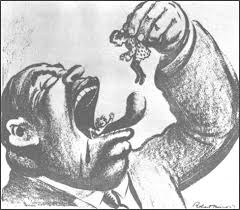
Some common causes of child labor are poverty, parental illiteracy, social apathy, ignorance, lack of education and exposure, exploitation of cheap and unorganized labor. The family practice to inculcate traditional skills in children also pulls little ones inexorably in the trap of child labor, as they never get the opportunity to learn anything else.
Absence of compulsory education at the primary level, parental ignorance regarding the bad effects of child labor, the ineffectively of child labor laws in terms of implementation, non availability and non accessibility of schools, boring and unpractical school curriculum and cheap child labor are some other factors which encourages the phenomenon of child labor. It is also very difficult for immature minds and undeveloped bodies to understand and organize them selves against exploitation in the absence of adult guidance.
Poverty and over population have been identified as the two main causes of child labor. Parents are forced to send little children into hazardous jobs for reasons of survival, even when they know it is wrong. Monetary constraints and the need for food, shelter and clothing drives their children in the trap of premature labor. Over population in some regions creates paucity of resources. When there are limited means and more mouths to feed children are driven to commercial activities and not provided for their development needs. This is the case in most Asian and African countries.
Illiterate and ignorant parents do not understand the need for wholesome proper physical, cognitive and emotional development of their child. They are themselves uneducated and unexposed, so they don’t realize the importance of education for their children.
The industrial revolution has also had a negative effect by giving rise to circumstances which encourages child labor. Sometimes multinationals prefer to employ child workers in the developing countries. This is so because they can be recruited for less pay, more work can be extracted from them and there is no union problem with them. This attitude also makes it difficult for adults to find jobs in factories, forcing them to drive their little ones to work to keep the fire burning their homes.
The incidence of child labor would diminish considerably even in the face of poverty, if there are no parties willing to exploits them. Strict implementation of child labor laws and practical and healthy alternatives to replace this evil can go a long way to solve the problem of child labor. Children who are born out of wedlock, orphaned or abandoned are especially vulnerable to exploitation. They are forced to work for survival when there are no adults and relatives to support them. Livelihood considerations can also drive a child into the dirtiest forms of child labor like child prostitution and organized begging.
FOLLOWING ARE THE COSEQUENCES:
Whatever the statistics ultimately it is the child who suffers.
• Physical injuries and mutilations
Children are caused by badly maintained machinery on farms and in factories, machete accidents in plantations, and any number of hazards encountered in industries such as mining, ceramics and fireworks manufacture.
• Pesticide poisoning
It is one of the biggest killers of child laborers. In Sri Lanka, pesticides kill more children than diphtheria, malaria, polio and tetanus combined. The global death toll each year from pesticides is supposed to be approximately 40’000.
• Growth deficiency
It is prevalent among working children, who tend to be shorter and lighter than other children; these deficiencies also impact on their adult life.
• Long-term health problems
There is possibility of diseases such as respiratory disease, asbestosis and a variety of cancers, are common in countries where children are forced to work with dangerous chemicals
• HIV/AIDS and other sexually transmitted
Diseases are rife among the one million children forced into prostitution every year; pregnancy, drug addiction and mental illness are also common among child prostitutes
• Exhaustion and malnutrition
Are a result of underdeveloped children performing heavy manual labour, working long hours in unbearable conditions and not earning enough to feed themselves adequately

No comments:
Post a Comment