Saturday, January 2, 2010

CHILD LABOR


INTRODUCTION
There are always two ways of looking at a problem. Either one can look at things statistically or emotionally. Statistically the scenario surrounding child labour can be good or bad but emotionally the situation is appalling. More so because the predicament of child labour is one that haunts the child throughout his/her life and may even put the future generations in jeopardy.
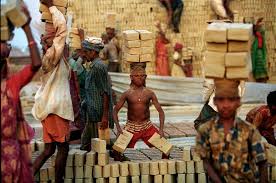
One doesn’t need an official definition of child labour. However, in broad sense it is the employment of children for any type of work when they ought to be studying. It encompasses exploitation, bonded labour etc. The term is used for domestic work, factory work, agriculture, mining, quarrying, having own work or business’ like selling food etc, helping parent’s business, prostitution or even child artists in the entertainment industry and other odd jobs. The condition of the child is hopeless because usually the family decides the work and the child is unaware of the kind of injustice meted out to him. So it becomes a problem created by the society where it can do better by helping children develop their personalities in these formative years.
We will explore various reasons that are attributable to the existence of child labour. Also in later sections a look is taken at the mitigation of this evil and the endeavour of the government to alleviate this problem.
CHILD LABOUR-A HISTORICAL PERSPECTIVE
At the start of the industrial revolution the new employers of the new factories thought that employment should be a collective activity and thus employed whole families who basically used to work in fields. But soon they found that it was very difficult controlling children running off to various places in the work area. So they started to be very strict and thus gradually whole families stopped to be taken into the same place lest they start protesting at their (employers) inhuman ways. Now the general poverty of people and the concentration of wealth in few hands aided to the advance of child labour.
And over this whole time the problem has only compounded and continues to be the bane of the society.
AN ANALYSIS
It has been observed and repeatedly stated in recent times that child labour does not remain a mere means of economic exploitation but has become a necessity due to the economic needs of the parents and the child himself. It is iterated that child labor is also caused by different factors like social traditions, family attitude, customs, and dearth of schools or parental reluctance to send children to school, industrialization, urbanization, migration etc. To counter the real situation called child labor and save little humans from abuse at a tender age, the government should be compelled to provide compulsory and free education to all children up to the age of fourteen years.
Child Labor began to be considered a human rights issue and became an issue of public dispute, when the foundation of universal schooling was laid. Historically the transformation came with the industrial revolution and the emergence of concepts like children’s rights and worker’s right’s. Child labor is widely prevalent in some form or the other, all over the world. Children are regularly employed to guide tourists, sometimes doubling up as a marketing force to bring in business for shop owners and other business establishment.
According to the statistics given by International Labor Organization there are about 218 million children between the age of 5 and 17 working all over the world. The figure excludes domestic labor. The most condemned form of child labor is the use of children for military purpose and child prostitution. Child agricultural works, child singers and child actors outside of school hours during season time are more acceptable by champions of human rights and law. The phenomenon of child labor is a complex development issue worthy of investigation. The fact that vulnerable children are being exploited and forced into work, which is not fit for their age, is a human rights concern now. India and other developed and developing countries are really plagued by the problem of child employment in organized and unorganized sectors.

Child labor is a human rights issue of immense sensitivity. Child labor is considered exploitative by the United Nations and International Labor Organization. The article 32 of the UN speaks about child labour as follows-“States parties recognize the right of the child to be protected from economic exploitation and from performing any work that is likely to be hazardous or to interfere with the child’s education, or to be harmful to the child’s health or physical, mental, spiritual, moral or social development.” To sum up, most countries of the world consider it highly inappropriate when a child below a certain age is put to work. People should be prohibited from hiring labor below a certain age. However, the minimum age at which a human can be put to work differs from country to country.
It is obligatory for all countries to set a minimum age for employment according to the rules of ILO written in Convention 138(C.138). The stipulated age for employment should not be below the age for finishing compulsory schooling that is not below the age of 15. Developing countries are allowed to set the minimum age at 14 years in accordance with their socio- economic circumstances.

C-138 has also made provisions for flexibility for certain countries, setting the minimum age of 12 and 13 for their children - but only for partaking in light work. Light work can be defined as children’s participation in only those economic activities which do not damage their health and development or interfere with their education. Yes, work that does not obstruct with a child’s education is considered light work and allowed from age 12 under the International Labor Organization (ILO Convention 138). It is because of this that many children employed in part time work like learning craft or other skills of a hereditary nature are not called child labors. The same work translates into child labor if a child is thrown into weaving carpets, working into factories or some other employment to earn money to sustain self, or augment his family’s income - without being given school education and allowed opportunities for normal social interactions. A child working part time (3-4 hours) to learn and earn for self and parents after school, is not considered ‘child labor’.
The Industrial revolution had ushered in the horrendous practice of employing children of 4 and 5 years in factories in environmental conditions, which were risky for their health and well being, often proving fatal. Developed countries have reacted sharply to this historical fact by equating “child labor” with human right violation. However poor countries are more accepting about child labor as a living necessity.
CHILD LABOUR TODAY
Child labor is a very complicated development issue, effecting human society all over the world. It is a matter of grave concern that children are not receiving the education and leisure which is important for their growing years, because they are sucked into commercial and laborious activities which is meant for people beyond their years. According to the statistics given by ILO and other official agencies 73 million children between 10 to 14 years of age re employed in economic activities all over the world. The figure translates into 13.2 of all children of 10 to 14 being subjected to child labor.
Child labor is most rampant in Asia with 44.6 million or 13% percent of its children doing commercial work followed by Africa at 23.6 million or 26.3% which is the highest rate and Latin America at 5.1 million that is 9.8%.
In India 14.4 % children between 10 and 14 years of age are employed in child labor.In Bangladesh 30.1%, in China 11.6%, in Pakistan 17.7%, in Turkey 24%, in Cote D’lvoire 20.5%, in Egypt 11.2%, in Kenya 41.3%, in Nigeria 25.8%, in Senegal 31.4%, in Argentina 4.5%, in Brazil 16.1%, in Mexico 6.7%, in Italy 0.4% and in Portugal 1.8%.
The above figures only give part of the picture. No reliable figures of child workers below 10 years of age are available, though they comprise a significant amount. The same is true of children in the former age group on whom no official data is available. If it was possible to count the number of child workers properly, and the number of young girls occupied in domestic labor and prostitution taken into account - the figure will emerge as hundreds of million.

It is estimated that there are 60 to 115 million working children in India- which was the highest in 1996 according to human rights watch. The problems coming from a centrally planned to market economy has led to the creation of many child workers in central and eastern Europe.

Historically the working force of child workers is more in rural areas compared to urban settings. Nine out of ten village children are employed in agriculture or household industries and craftwork. In towns and cities children are more absorbed in service and trading sectors rather that marketing. This is due to the rapid urbanization of the modern world.
CHILD LABOUR IN INDIA
Child labor in India is an immense human rights issue for. It is a serious and extensive problem, with many children under the age of fourteen working in carpet making factories, glass blowing units and making fireworks with bare little hands. According to the statistics given by Indian government there are 20 million child laborers in the country, while other agencies claim that it is 50 million.
In Northern India the exploitation of little children for labor is an accepted practice and perceived by the local population as a necessity to alleviate poverty. A false sense of playing saviour to the children being employed is also prevalent. Carpet weaving industries pay very low wages to child laborers and make them work for long hours in unhygienic conditions. Children working in such units are mainly migrant workers from Northern India, who are shunted here by their families to earn some money and send it to them. Their families dependence on their income, forces them to endure the onerous work conditions in the carpet factories.
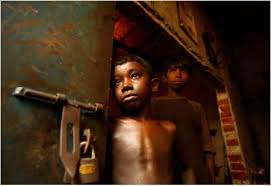
The situation of child laborers in India is desperate. Children work for eight hours at a stretch with only a small break for meals. The meals are also frugal and the children are ill nourished. Most of the migrant children, who cannot go home, sleep at their work place, which is very bad for their health and development. Seventy five percent of Indian population still resides in rural areas and are very poor. Children in rural families who are ailing with poverty perceive their children as an income generating resource to supplement the family income. Parents sacrifice their children’s education to the growing needs of their younger siblings in such families and view them as wage earners for the entire clan.
Child labor is a conspicuous problem in India. Its prevalence is evident in the child work participation rate, which is more than that of other developing countries. Poverty is the primary reason for child labor in India. The meager income of child laborers is also absorbed by their families. The paucity of organized banking in the rural areas creates a void in taking facilities, forcing poor families to push their children in harsh labor, the harshest being bonded labor.

Bonded labor traps the growing child in a hostage like condition for years. The importance of formal education is also not realized, as the child can be absorbed in economically beneficial activities at a young age. Moreover there is no access to proper education in the remote areas of rural India for most people, which leaves the children with no choice.
Employment with others and self employment both come under the aegis of ‘child labor’. It has been seen that children who are street sellers, street entertainers, rag pickers, child prostitutes or pornography models, beggars etc - are mostly without natural guardians and exploited by underground gangsters and racketeers. These children are mostly children of illegal migrants.
They are the victim of abandonment, riots, wars or just sheer poverty and homelessness. In poor countries some children are helping hands for their parents or are employed in factories, commercial organizations or households with the consent of the parents. The most appalling form of child labor is prostitution and modeling for child pornography. Some children are even sold to fiefs by their parents for money.
India accounts for the second highest number where child labour in the world is concerned. Africa accounts for the highest number of children employed and exploited. The fact is that across the length and breadth of the nation, children are in a pathetic condition.
While experts blame the system, poverty, illiteracy, adult unemployment; yet the fact is that the entire nation is responsible for every crime against a child. Instead of nipping the problem at the bud, child labour in India was allowed to increase with each passing year. And today, young ones below the age of 14 have become an important part of various industries; at the cost of their innocence, childhood, health and for that matter their lives.

CAUSES OF CHILD LABOUR & CONSEQUENCES FOR CHILDREN


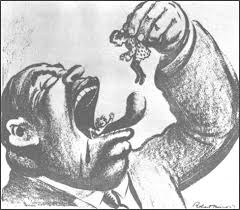
Some common causes of child labor are poverty, parental illiteracy, social apathy, ignorance, lack of education and exposure, exploitation of cheap and unorganized labor. The family practice to inculcate traditional skills in children also pulls little ones inexorably in the trap of child labor, as they never get the opportunity to learn anything else.

Absence of compulsory education at the primary level, parental ignorance regarding the bad effects of child labor, the ineffectively of child labor laws in terms of implementation, non availability and non accessibility of schools, boring and unpractical school curriculum and cheap child labor are some other factors which encourages the phenomenon of child labor. It is also very difficult for immature minds and undeveloped bodies to understand and organize them selves against exploitation in the absence of adult guidance.
Poverty and over population have been identified as the two main causes of child labor. Parents are forced to send little children into hazardous jobs for reasons of survival, even when they know it is wrong. Monetary constraints and the need for food, shelter and clothing drives their children in the trap of premature labor. Over population in some regions creates paucity of resources. When there are limited means and more mouths to feed children are driven to commercial activities and not provided for their development needs. This is the case in most Asian and African countries.
Illiterate and ignorant parents do not understand the need for wholesome proper physical, cognitive and emotional development of their child. They are themselves uneducated and unexposed, so they don’t realize the importance of education for their children.
The industrial revolution has also had a negative effect by giving rise to circumstances which encourages child labor. Sometimes multinationals prefer to employ child workers in the developing countries. This is so because they can be recruited for less pay, more work can be extracted from them and there is no union problem with them. This attitude also makes it difficult for adults to find jobs in factories, forcing them to drive their little ones to work to keep the fire burning their homes.
The incidence of child labor would diminish considerably even in the face of poverty, if there are no parties willing to exploits them. Strict implementation of child labor laws and practical and healthy alternatives to replace this evil can go a long way to solve the problem of child labor. Children who are born out of wedlock, orphaned or abandoned are especially vulnerable to exploitation. They are forced to work for survival when there are no adults and relatives to support them. Livelihood considerations can also drive a child into the dirtiest forms of child labor like child prostitution and organized begging.


FOLLOWING ARE THE COSEQUENCES:
Whatever the statistics ultimately it is the child who suffers.
• Physical injuries and mutilations
Children are caused by badly maintained machinery on farms and in factories, machete accidents in plantations, and any number of hazards encountered in industries such as mining, ceramics and fireworks manufacture.
• Pesticide poisoning
It is one of the biggest killers of child laborers. In Sri Lanka, pesticides kill more children than diphtheria, malaria, polio and tetanus combined. The global death toll each year from pesticides is supposed to be approximately 40’000.
• Growth deficiency
It is prevalent among working children, who tend to be shorter and lighter than other children; these deficiencies also impact on their adult life.
• Long-term health problems
There is possibility of diseases such as respiratory disease, asbestosis and a variety of cancers, are common in countries where children are forced to work with dangerous chemicals
• HIV/AIDS and other sexually transmitted
Diseases are rife among the one million children forced into prostitution every year; pregnancy, drug addiction and mental illness are also common among child prostitutes
• Exhaustion and malnutrition
Are a result of underdeveloped children performing heavy manual labour, working long hours in unbearable conditions and not earning enough to feed themselves adequately

PROHIBITION OF EMPLOYMENT OF CHILDREN IN CERTAIN OCCUPATIONS AND PROCESSES


1. Transport of passengers, goods; or mails by railway
2. Cinder picking, clearing of an ash pit or building operation in the railway premise.
3. Work in a catering establishment at a railway station, involving the movement of vendor or any other employee of the establishment from one platform to another or into or out of a moving train.
4. Work relating to the construction of railway station or with any other work where such work is done in close proximity to or between the railway lines.
5. The port authority within the limits of any port.
6. Work relating to selling of crackers and fireworks in shops with temporary licenses.
7. Abattoirs/slaughter Houses.
8. Automobile workshops and garages.
9. Foundries.
10. Handling of taxies or inflammable substance or explosives.
11. Handloom and power loom industry.
12. Mines (Under ground and under water) and collieries.
13. Plastic units and Fiber glass workshop.

CHILD LABOUR POLICY IN INDIA


There are specific clauses in the draft of Indian constitution dated 26th January 1950, about the child labor policy in India. These are conveyed through different articles in the Fundamental rights and the Directive Principles of the State Policy. They lay down four specific policy rules regarding child labor.

They are as following:- 1) ( Article 14) No child below the age of 14 years shall be employed to work in any factory or mine or engaged in any other hazardous employment.

2) Article 39-E) The state shall direct its policy towards securing that the health and strength of workers, men and women and the tender age of children are not abused and that they are not forced by economic necessity to enter vocations unsuited to there are and strength.

3) ( Article 39-f ) Children shall be given opportunities and facilities to develop in a healthy manner and in conditions of freedom and dignity and that childhood and youth shall be protected against moral and material abandonment.

4) (Article 45 ) The state shall endeavor to provide within a period of ten years from the commencement of the constitution for free and compulsory education for all children until they complete the age of fourteen years.

The main legislative measures at the national level are The Child Labor Prohibition and Regulation Act -1986 and The Factories Act -1948. The first act was categorical in prohibiting the employment of children below fourteen years of age, and identified 57 processes and 13 occupations which were considered dangerous to the health and lives of children. The details of these occupations and processes are listed in the schedule to the said Act.

The factories act again prohibits the employment of children less than fourteen years of age. However an adolescent aged between 15 and 18 can be recruited for factory employment only after securing a fitness certificate from a medical doctor who is authorized. The Act proceeds to prescribe only four and hour’s work period per day for children between 14 and 18 years. Children are also not allowed to work in night shifts.

Moreover, in the year 1996 the Supreme Court of India came out with a judgment in court that directed the State and Union government to make a list of all children embroiled in hazardous occupations and processes. They were then told to pull them out of work and asked to provide them with proper education of quality. The judiciary also laid down that Child Labor and Welfare Fund is set up. The contribution for this was to be received from employers who contravened the Child Labor Act.

India is also a signatory to the UN Convention on the Rights of the Child, ILO Abolition of Forced Convention – No 105 and ILO Forced labor Convention – No. 29. A National Labor Policy was also adopted in the year 1987 in accordance with India’s development strategies and aims. The National Policy was designed to reinforce the directive principles of state policy in the Indian constitution.


NOW IS THE TIME TO ACT


The future of a community is in the well being of its children. The above fact is beautifully expressed by Wordsworth in his famous lines “child is father of the man”. So it becomes imperative for the health of a nation to protect its children from premature labor which is hazardous to their mental, physical, educational and spiritual development needs. It is urgently required to save children from the murderous clutches of social injustice and educational deprivation, and ensure that they are given opportunities for healthy, normal and happy growth.

The venerable Indian poet Rabindranth Tagore has said time and again, that every country is absolutely bound by its duty to provide free primary education to its children. It is important to remember that industrialization can afford to wait but youth cannot be captured for long. It is imperative that the basic tenet made in article 24 of the Indian constitution - prohibiting the employment of any child below fourteen years of age, in a factory, mine or any other hazardous employment be stopped – be adhered to. There should be no ambiguity in ensuring the right of every child to free basic education and the promise of the constitution should be fully implemented in the here and now.

Projects related with human resource development, dedicated to the child welfare issues must be given top priority by the central and state governments to stop the menace of child labor. Child labor laws need to be strictly implemented at the central and state levels. Corruption and negligence in child labor offices and employee circles should be dealt with very strictly by the judiciary and the police force.

The development needs of growing children can only be provided for, by stopping the onerous practice of child labor in organized and non organized sectors with utmost sincerity. This is the only way a nation can train its children to be wholesome future citizens, who are happy and prosperous. The provision of equal and proper opportunities for the educational needs of growing children in accordance with constitutional directives will go a long way in stopping the evil practice of child labor.

Concerned about the future of its children India has implemented a country- wide ban recently, on children below fourteen working in the hospitality sector and as domestics. It is intended that those who are found to violate the law will be fined with 430 dollars and sent into rigorous imprisonment for two years. Children in India are not allowed to work in mines, factories and other hazardous jobs already. Two more professions have been added in a list of fifty seven occupations which were considered hazardous for a child’s development needs in the ‘child labor act’ passed in 1986. Childs rights activists are waxing eloquent in high pitched voices about the absolute importance of stopping child labor. But legislation in this regard is just like an intention. It is more important to take development measures to ensure its practical application by eliminating the reasons of child labor from our society. The reasons giving birth to child labor are poverty, illiteracy, scarcity of schools, ignorance, socially regressive practices, blind customs and traditions, migration and last but not the least corruption amongst employees and government labor organizations. People should not be able to get away with employing and exploiting children.

MEASURES TO COMBAT CHILD LABOUR:

Child labour is a universal problem and as a citizen of India we must strive to take stern actions against child labour. The primary actor has to be the government. The government of India through its various initiatives has shown commitment to root out this social evil.some of them have been listed;

Indo-US DOL project

The grants-in aid scheme

The national child labour project

The programme on the elimination of child labour.

These have been implemented in various states. Also it is important to strengthen the social security net for adults so that no forced child labour takes place. So, on other fronts like school enrolment and keeping them there through “Sarva Shiksha Abhiyaan” or “Mid-day Meal scheme” as well as NREGA and adult education programmes can help to a massive extent.


Role of NGOs: NGOs have an important role to play in the elimination of child labour. Government does not have the infrastructure to reach every section of the society and particularly the millions who work and live in remote areas. NGOs can act as a bridge between hard-to-reach areas and the government.

Role of Media: The role of media in elimination of child labour is one of the most important components of the process of total human development. The media should expose defaulting firms or business houses that clandestinely employ children and violate laws relating to child labour.
Role of the society:

The society has to be agent in bringing about a change. It should shun this practice and socially ostracize people who encourage or employ. This they can do by notifying authorities as employing children is criminal offence. They would do great service to this nation by saving a generation.

But the future doesn’t seem to be very dark. It has been professed in recent times that in later stages of industrialization, factors such as emergence of a reform movement, continued technological advancement, and growing availability of alternatives (especially schools), operate to curb child labor. One can only hope.
Effective state intervention to eliminate inequities, including class and caste barriers to employment and other opportunities in areas such as health and education, will put an end to child labour.